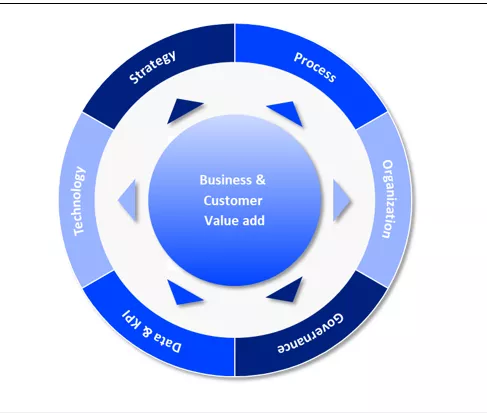
Understanding your direct suppliers is essential, but in today’s complex supply chains, that’s just the beginning. The real power of this collaborative concept lies in its ability to give you visibility beyond your trading partners, extending into the full network of suppliers that contribute to your operations. This broader view is crucial because risks can arise at any point in the supply chain, and having insight into your suppliers’ suppliers can make the difference between smooth operations and unexpected disruptions.
By leveraging SNC, you can start to map out this extended network, identify potential vulnerabilities and take proactive steps to mitigate risks before they impact your business. This isn’t just about having more information; it’s about using that information strategically to strengthen your entire supply chain to become a value chain.
Key actions:
- Look beyond direct tiers: Move past just knowing your direct suppliers and start mapping out the wider network. This includes key product categories, supplier tiers and production sites.
- Identify critical risks: By understanding where risks might arise in your extended network, you can proactively address potential disruptions.
- Plan for the big picture: Use this broader visibility to make more informed decisions and strengthen your overall supply chain resilience.
In a supply chain, efficiency and collaboration are driven by how well processes are integrated across different functions. However, without standardization, these processes can become disjointed, leading to miscommunication, delays and inefficiencies. Enabling supplier collaboration and creating a cohesive framework makes it so that all parties—internal teams and external partners—operate within clearly defined standards.
Process integration goes beyond simply having a plan. It’s about ensuring that every stakeholder understands and adheres to that plan, resulting in smoother operations and fewer surprises. When your processes are synchronized across the supply chain, you can respond more quickly to changes, manage resources more effectively, and ultimately, deliver better results for your business and your customers.
Key actions:
- Set clear process standards: Define and communicate clear expectations, roles and procedures across your supply chain to ensure everyone is on the same page.
- Ensure consistent adherence: Make sure that all teams stick to these standardized processes to prevent inefficiencies and miscommunication.
- Map & manage processes: Chart out collaboration processes with suppliers based on their lifecycle stage and importance, ensuring effective and consistent management.
Every supply chain is unique, with its own set of challenges, opportunities and requirements. That’s why adopting a one-size-fits-all solution can often do more harm than good. Instead, SNC allows you to create a customized technology landscape that addresses the specific needs of your supply chain, ensuring that each component is optimized for maximum performance.
This approach in SNC involves selecting and integrating best-of-breed solutions that align with your business goals, whether that’s improving forecasting accuracy, enhancing real-time tracking or streamlining collaboration with suppliers on your way to becoming a true value chain. By tailoring your technology stack to fit your needs, you not only enhance efficiency but also build a more agile and responsive supply chain capable of adapting to future challenges.
Key actions:
- Choose the right tools: Select and integrate the best solutions that address your supply chain’s unique capabilities and challenges.
- Leverage industry insights: Use resources like Gartner’s Magic Quadrant to help guide your selection of technology solutions.
- Customize for maximum impact: Ensure that your SNC is customized to suit your specific needs, enabling optimal performance across all areas of your supply chain.
Data is one of the most valuable assets a company can have in today’s digital world. However, the sheer volume of data generated across a supply chain can be overwhelming, and without proper management and collaboration, it can lead to confusion rather than clarity. The goal is to harmonize and integrate data from your various sources, turning raw information into actionable insights that drive better decision-making and enhance collaboration.
By consolidating your data into a unified system, you can ensure consistency across different regions and business units, making it easier to identify trends, anticipate risks and respond swiftly to changes. Additionally, by leveraging advanced analytics and visualization tools, you can gain deeper insights into your supply chain operations, enabling you to make informed decisions that improve efficiency and reduce costs.
Key actions:
- Unify data governance: Transition to a unified data system to harmonize information across different regions and systems.
- Integrate internal & external data: Create a shared data environment where both internal and supplier data are aligned, providing a clear and consistent view of the supply chain.
- Leverage advanced analytics: Utilize data lakes and visualization tools to draw actionable insights, helping you to make informed decisions quickly.
The effectiveness of Supplier Network Collaboration doesn’t just depend on technology; it requires an organizational structure that supports seamless execution and a sound onboarding and integration approach. This means aligning your core supply chain functions—such as Plan, Make, Quality, Source, Deliver and Supplier Partnership Management—with your SNC strategy, ensuring that every part of your organization is working toward the same goals.
Additionally, having a dedicated team to manage supplier relationships and coordinate across the supply chain is essential for maintaining consistency and fostering strong partnerships. By structuring your organization to support your SNC implementation, you can ensure that all processes are carried out efficiently and that your supply chain is agile and responsive to changing conditions.
Key actions:
- Align core functions: Ensure that all key supply chain functions, such as Plan, Source Make, Deliver and Quality, are aligned with your SNC strategy.
- Strengthen supplier management: Create a dedicated team to manage supplier onboarding, organized by product categories or stages of manufacturing.
- Establish a Center of Excellence: Develop a center of excellence to oversee the implementation and ongoing management of SNC, ensuring consistency and effectiveness across the organization.
Adopting Supplier Network Collaboration is about transforming your entire approach to supply chain management on your journey toward becoming a value chain of the future. By focusing on visibility, process integration and standardization, tailored solutions, data management and organizational alignment, SNC can help your company build a supply chain that is more efficient, more resilient and more adaptable to the challenges come. The path to a fully integrated supplier network might seem daunting, but the reward is clear: a more agile, responsive and robust supply chain—a true value chain—can turn potential disruptions into invaluable opportunities for growth.
 News
 News