Therapeutic radiopharmaceuticals are scaling fast, and operations teams are feeling the pressure of short half-lives, specialist bottlenecks, and QC-driven release windows. If you define “advanced therapy operations” by constraints instead of modality, radiopharma fits the same planning playbook as cell and gene therapy: finite scheduling, traceability, QC orchestration, and exception-driven replanning.
On the shop floor, taxonomy never rescues a missed patient window.
In a rush? Here are the 3 key takeaways
- 👉 Short half-lives and QC gates make radiopharma planning fragile, even when demand is growing.
- 👉 If your operation is patient-linked and time-windowed, you need finite capacity scheduling with end-to-end traceability across LIMS, MES, and ERP.
- 👉 Binocs™ helps teams orchestrate constrained resources and QC release to hit patient and delivery windows reliably.
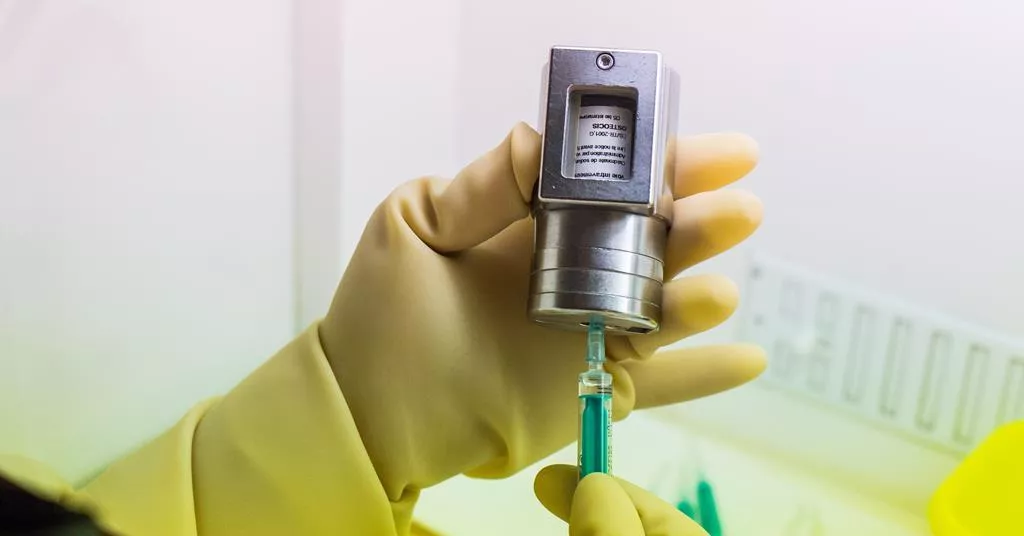
Therapeutic radiopharmaceuticals combine a targeting molecule with a radioactive isotope to deliver radiation to specific tissue, most often tumors. Because the isotope decays on a fixed clock and doses are often patient-specific, manufacturing, QC, release, and delivery all have hard time windows under GMP and radiation-safety constraints.
In strict scientific taxonomy, radiopharmaceuticals are not “advanced therapies” in the ATMP sense. But operations leaders do not manage categories; they manage constraints, failure costs, and time windows.
So the more useful question is: do radiopharma operations behave like other time-critical, patient-linked environments when plans break?
Used operationally, “advanced therapy operations” is an umbrella for environments that share the same execution physics:
- Patient-linked demand and non-negotiable time windows
- Scarce specialist resources that drive throughput
- QC and release gates that set the real pace
By that definition, radiopharma sits next to autologous and allogeneic therapy operations because the scheduling problem is structurally similar.
- Time windows are the primary constraint
CGT runs on vein-to-vein timelines. Radiopharma runs on decay and delivery windows. In both, delays destroy value, so planning must be responsive, not static.
- Traceability is part of the product
CGT depends on chain-of-identity and chain-of-custody. Radiopharma requires traceability across isotope, batch, dose, and patient. That makes handoffs and status visibility high-risk points, not admin overhead.
- Specialist bottlenecks define throughput
CGT constraints often sit in cleanrooms, incubators, QC labs, and qualified operators. Radiopharma constraints often sit in hot cells, synthesis modules, cyclotron slots, shielded isolators, QC testing, and qualified staff. You cannot plan these like conventional manufacturing because capacity is finite and highly specific.
- QC release gates are the real pacing items
In both domains, QC testing, documentation review, deviations, and release coordination can move the true critical path. If QC is not scheduled as part of the plan, the plan is incomplete.
- Variability is structural
CGT variability comes from starting material and patient timing. Radiopharma variability comes from isotope availability, equipment uptime sensitivity, and patient appointment volatility. You need controlled flexibility, fast replanning, and clear decision rules for exceptions.
If radiopharma is managed as advanced therapy operations by constraints, the enabling capabilities are the same:
- Build finite, constraint-based schedules across equipment and qualified staff
- Make time windows explicit, including QC gates and release targets
- Connect execution status and traceability across LIMS, MES, and ERP
- Replan fast when patients shift or equipment goes down, with controlled trade-offs
- Run scenarios to protect patient windows and prioritize the right work at the right time
Parts of it are: GMP controls, batch records, aseptic processes, formal quality systems. But the moment a decay clock starts and a patient window locks in, the operational physics change. You are no longer optimising throughput on a flexible timeline; you are managing a countdown with consequences. That is the difference between conventional pharma scheduling and advanced therapy operations, and it is the reason radiopharma belongs in the same planning conversation as cell and gene therapy.
Radiopharma does not need a new taxonomy label, but it does need the same operations discipline used in other time-critical, patient-linked modalities. If your bottlenecks are specialist capacity, QC gates, and a ticking clock, the next step is to treat planning as orchestration, not calendar management.
 News
 News