Mathias Lasoen
Head of Growth Marketing
Effectively managing many projects at once is challenging, to say the least. More projects mean more interdependencies, more people and team constraints, more due dates… In short, you need a tool to manage this. Binocs has a different approach than most other digital project management tools on the market: by applying a rule-based operating model, we automatically translate work packages into properly sequenced tasks, ready to be executed.
The weather is nice! Let’s organize a BBQ. What do we need to do?
The above list is the collection of tasks that need to be done to fulfill the BBQ’s expectations (= your project).
But what if some of our guests as vegetarians? Or vegan? In that case, it’s probably best to order some extra vegetables. What if the weather forecast is bad? Then it’s probably a safe bet to prepare some tents for our guests. What if there will be children? Should we foresee a bouncy castle in that case? It’s clear that the tasks you will need to do to organize your BBQ depend on the situation: your guests, the weather forecast…
Organizations run a multitude of ‘BBQs’ simultaneously. A couple of examples:
Planning all those ‘BBQs’ effectively is extremely challenging. Most project management tools let you define the activities for the BBQs manually or give you static templates as a tool to reduce the manual work.
Adapting those projects manually can be tedious and risky: whenever you make a small change or you want to reorganize tasks in MS Project, you feel like you should be an expert to understand the consequence of your manual change. “Hmm, not sure what happened behind the scenes…”.
Binocs has a different approach. You can teach Binocs:
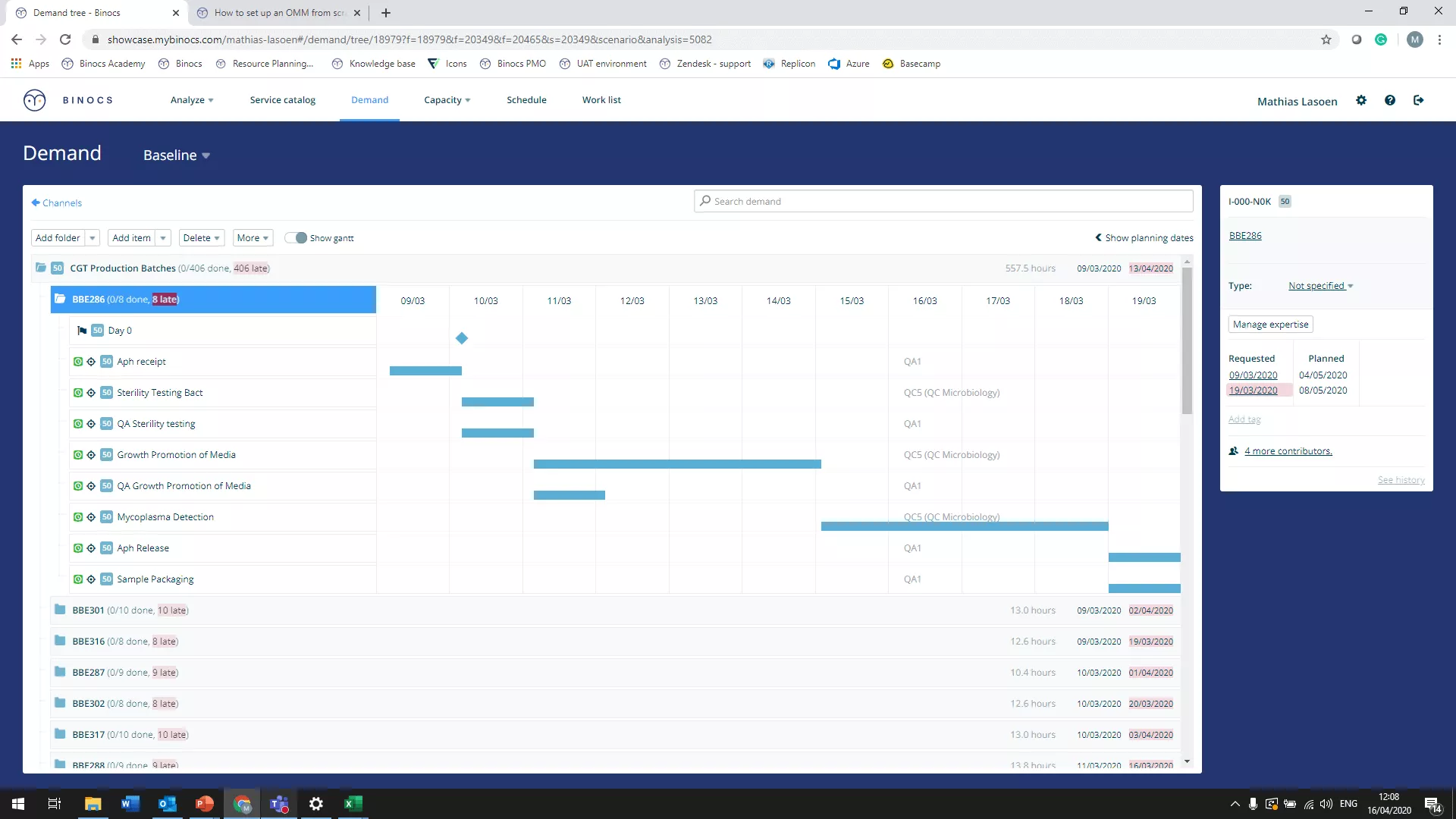
You can do this by defining your operating model in Binocs, which acts like dynamic templates. See the operating model as a ‘translation engine’ that automatically translates work packages into a multitude of demand lines, properly sequenced across different functional teams. Once a project is confirmed, the operating model concept allows you to define local variations (if applicable).
In short, Binocs automates the creation of Gantt charts. That leaves you / the planner with more time to focus on what really matters: will we have enough resources available to execute the project? Where could there be a bottleneck? Should we delay the project? What is the impact if we do?
This, in turn, makes project management more efficient and error-free (by partly automating some of the non-value adding work), creates visibility on projects across your teams & ultimately increases the likelihood you’ll deliver.
Do you want to teach Binocs how you work? We’ re happy to help! Check free resource planning!
About the AuthorMathias is the Head of Growth Marketing for Binocs.