To effectively manage these materials, it is necessary to accurately forecast consumption—that is, know in advance which analyses will be performed and thus estimate how much of each reagent will be consumed in delivering those analyses in the coming weeks and months. By comparing expected future demand against known stock quantities, labs can (in principle) limit their inventory expenditure and minimize wastage, making this process critical to running a productive laboratory.
Many labs may still choose to manage their inventory using pen and paper or basic spreadsheets, however, with increasing digitalization and a growing move towards paperless practices, smarter methods are required. Smarter, though, doesn’t need to mean more complicated or time-consuming—indeed, using the best tools and doing the job right on the first go can quickly result in quantifiable time and budgetary gains.
So, what does “smarter” look like? Let’s keep it simple.
A system of effective reagent management needs to intelligently balance several realities and meet specific requirements:
- Reagents are business-critical: reagents need to be on hand whenever your analysts need them, otherwise, they can’t execute their work.
- Requirement: avoid reagent non-availability or stock-out, no exceptions.
- Holding reagents in stock costs money: reagents take up limited space, can require refrigeration and can expire while still in storage.
- Requirement: minimize excess inventory and use materials within their shelf life to avoid wastage.
- Restocking reagents takes time: it’s not practical (or even always possible) to spontaneously order more reagents when you see you are running out—they require production, bridging, and validation, which all contribute to long lead times.
- Requirement: plan well ahead to ensure there is no shortfall of critical consumables.
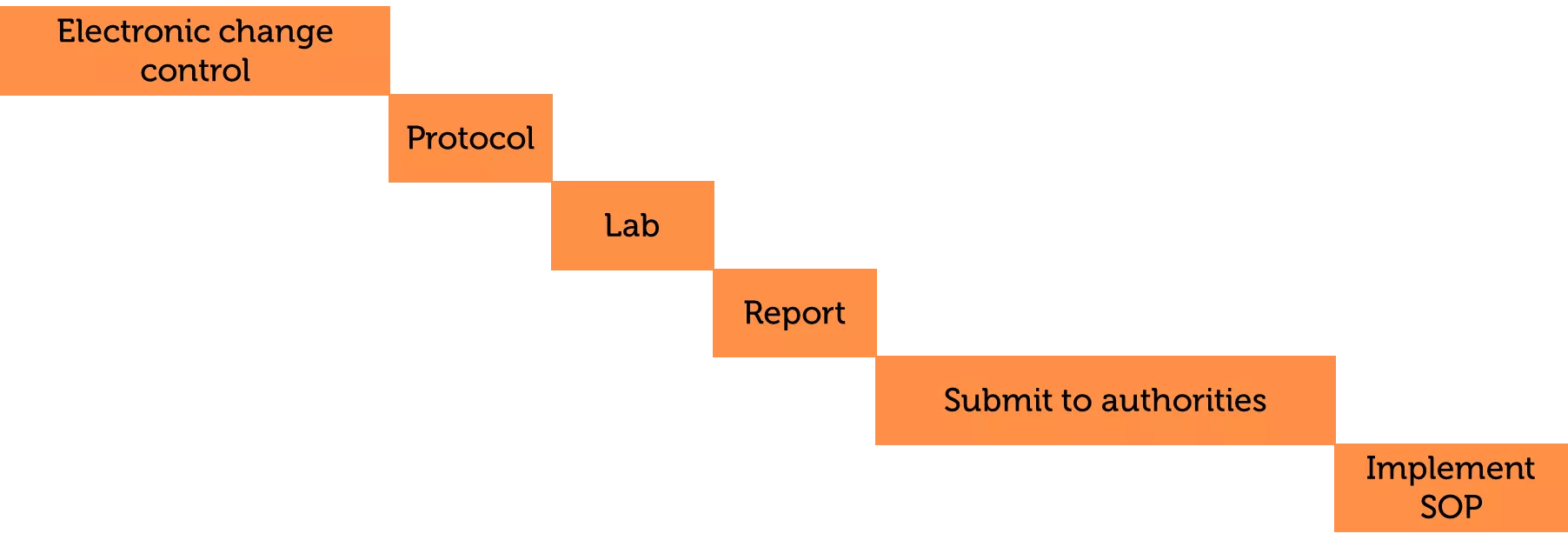
- Qualifying reagents requires time and resources: the process of qualifying standard reference material (for instance) can take up to a year and involve multiple steps executed by different individuals.
- Requirement: prioritize such activities to ensure there is sufficient capacity for qualifying materials by the time they are needed.
Manually balancing these realities is a significant challenge because:
- The top priority is ensuring that reagents are available when your analysts need them, however, lab demand is volatile, which makes restock requirements unpredictable. This unpredictability is every lab’s Achilles heel so, to avoid risking successful delivery due to missing reagents, they traditionally have no choice but to overstock. In the war between productivity and inefficiency, avoidable wastage will always be the lesser of two evils.
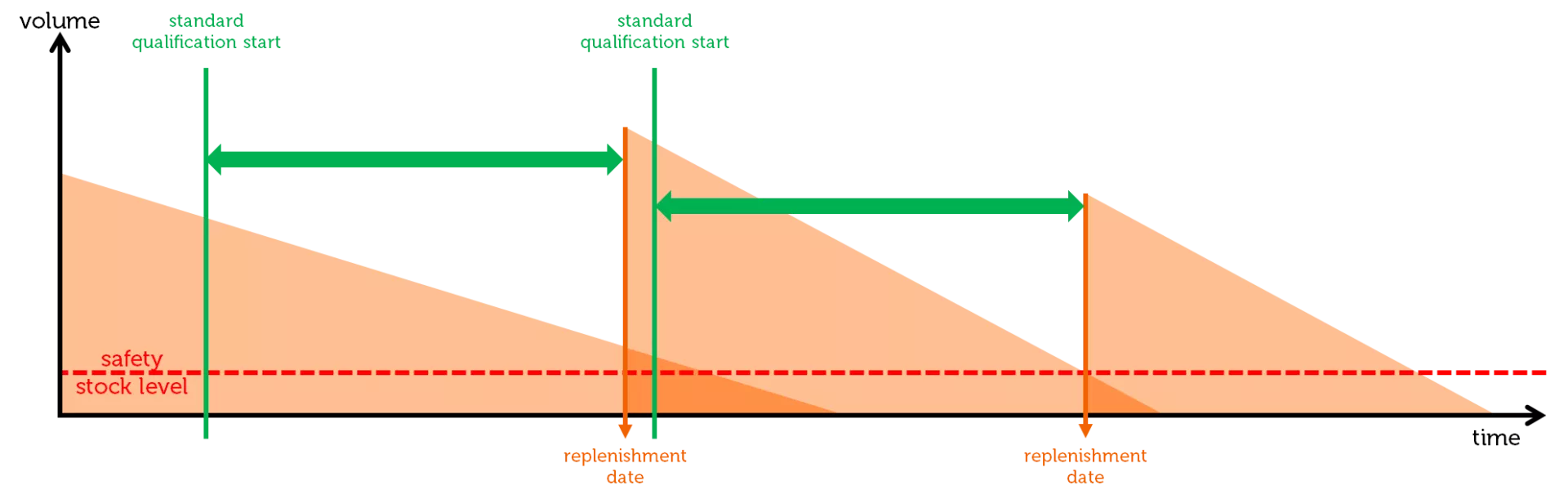
- Without a systematic way of forecasting and tracking demand (and thus reagent consumption), it can be almost impossible to determine the optimal replenishment date that will avoid hitting the expiration date or safety stock.
- Without visibility of the lab’s mid-to-long term capacity, there can be little guarantee that there will be the necessary resources for timely reagent qualification.
So, how can you immediately establish an effective system for optimizing your reagents inventory management? These five steps, although simplified, might be a good start:
- Step 1: make an accurate inventory of your existing stock (and note the expiry dates)
- Step 2: use expected demand to forecast your reagent consumption rate (predicting the downward slope)
- Step 3: calculate your optimal replenishment dates (taking into account expiration dates and safety stock)
- Step 4: calculate the latest date by which you need to start the material qualification (to ensure it’s available when the lab needs it)
- Step 5: ensure you have sufficient capacity to deliver qualification activities (based on the availability of appropriately qualified personnel and instruments)
 News
 News