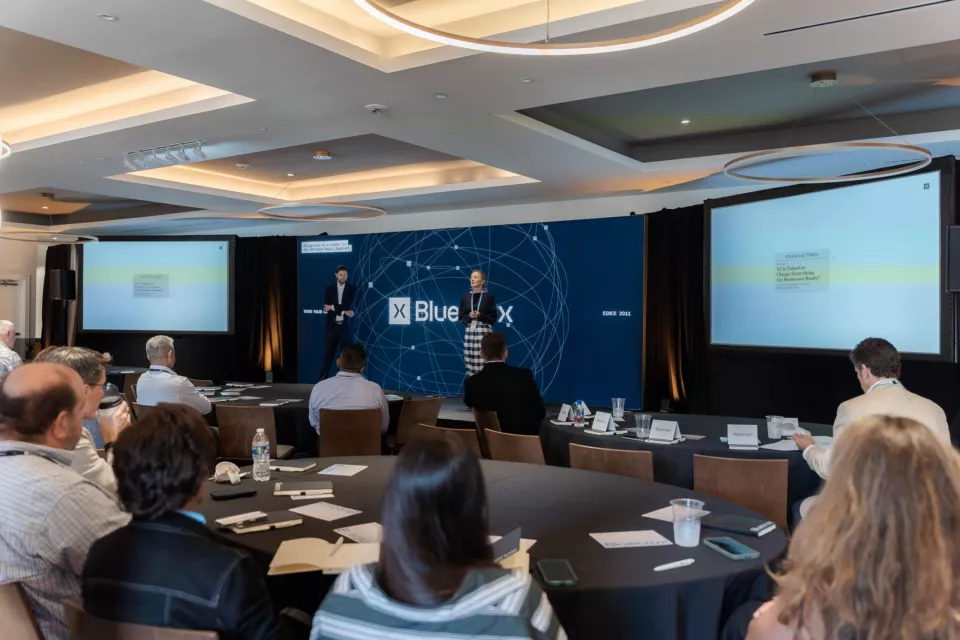
At the recent Cutting X Connect: Life Science Planning Council, trusted peers and leaders from pharma giants like GSK, AstraZeneca, Johnson & Johnson, MSD, Novo Nordisk, bioMérieux, and UCB gathered to discuss the future of planning in pharma. The central theme? Digital integration in pharma – and how it’s reshaping end-to-end visibility and cross-functional collaboration across manufacturing, QC, and supply chains.
Because, as planning leaders clearly emphasized, adopting new technologies alone isn’t enough. True transformation requires shifting mindsets and enabling collaboration across traditionally siloed functions. Without this, even sophisticated solutions like Bluecrux’s Binocs™ and OMP’s Unison Planning™ won’t deliver their full potential.
Let’s break it down.
Mindset matters as much as technology
While new tools enable better planning, their true potential hinges on cultural readiness. Leaders from AstraZeneca highlighted how embedding change management and cultural alignment early on was essential to their successful global planning transformation. Changing tools is straightforward; changing behaviors and mindsets requires ongoing dialogue, trust-building, and clear alignment around goals.
“Handshake integration”: bridging QC and supply planning
One key insight shared at the Council was that QC operations, often managed separately, can account for up to 55% of lead times in pharma manufacturing. This represents significant potential for efficiency gains through digital integration. Bluecrux’s “handshake integration” approach – connecting Binocs and Unison Planning– enables proactive communication, shared data, and standardized processes, dramatically reducing firefighting and emotional decision-making.
Digital scenario planning beyond budget season
Another vital insight? Scenario planning shouldn’t be limited to annual budgeting exercises. Real-time, digitally integrated scenario planning should become a monthly, dynamic practice. Companies like GSK and AstraZeneca advocate integrating QC constraints into scenario-based S&OP (Sales and Operations Planning) and S&OE (Sales and Operations Execution) cycles. The result is improved agility, better resource management, and fewer inventory emergencies.
Aligning on priorities reduces emotional friction
Digital integration also facilitates more objective decision-making. Establishing clear, data-driven rules around production priorities can help remove urgency and emotion from cross-functional negotiations. Tools like Binocs and Unison Planning enable differentiated lead times for critical, important, and flexible orders, freeing QC and supply chain teams from constant ad hoc escalations.
Planning transformation is business change – not just IT
AstraZeneca’s experience underscores the need to rethink roles, structures, and incentives before implementing digital planning tools. Successful digital integration in pharma begins with designing an effective operating model first, then deploying technologies like Binocs and Unison Planning. Prioritizing knowledge transfer, cultural sensitivity, and strategic engagement from the start ensures lasting success.
Segmentation: The future of pharma planning
AstraZeneca’s innovative segmentation strategy demonstrates another area where digital integration shines. By classifying products based on complexity and business impact, they ensure streamlined products run efficiently with minimal oversight, while more complex products receive detailed human attention. This strategy enables greater productivity without increasing headcount, crucial in today’s cost-sensitive environment.
The Life Science Planning Council reaffirmed that achieving planning excellence in pharma requires more than just digital tools – it demands deep, integrated transformation of processes, mindsets, and collaboration. As digital integration continues to reshape the industry, organizations that embrace these insights will lead in agility, efficiency, and effectiveness.
 News
 News