Whether therapy developers or CDMOs, navigating the intricate labyrinth of Cell and Gene Therapies (CGT) is no small feat. There’s a multitude of moving parts with incredibly high stakes—it’s literally a matter of life and death. That’s why effective planning, scheduling, and operational management can be critical factors in determining whether an eligible patient is even able to receive their life-saving treatment.
In this blog post, Adam Lester-George briefly explores the roles of two key stakeholders whose responsibilities can have the most significant impact on patient outcomes—even though the patient will never come into contact with them. Those stakeholders are cell and gene therapy developers and Contract Development and Manufacturing Organizations (CDMOs).
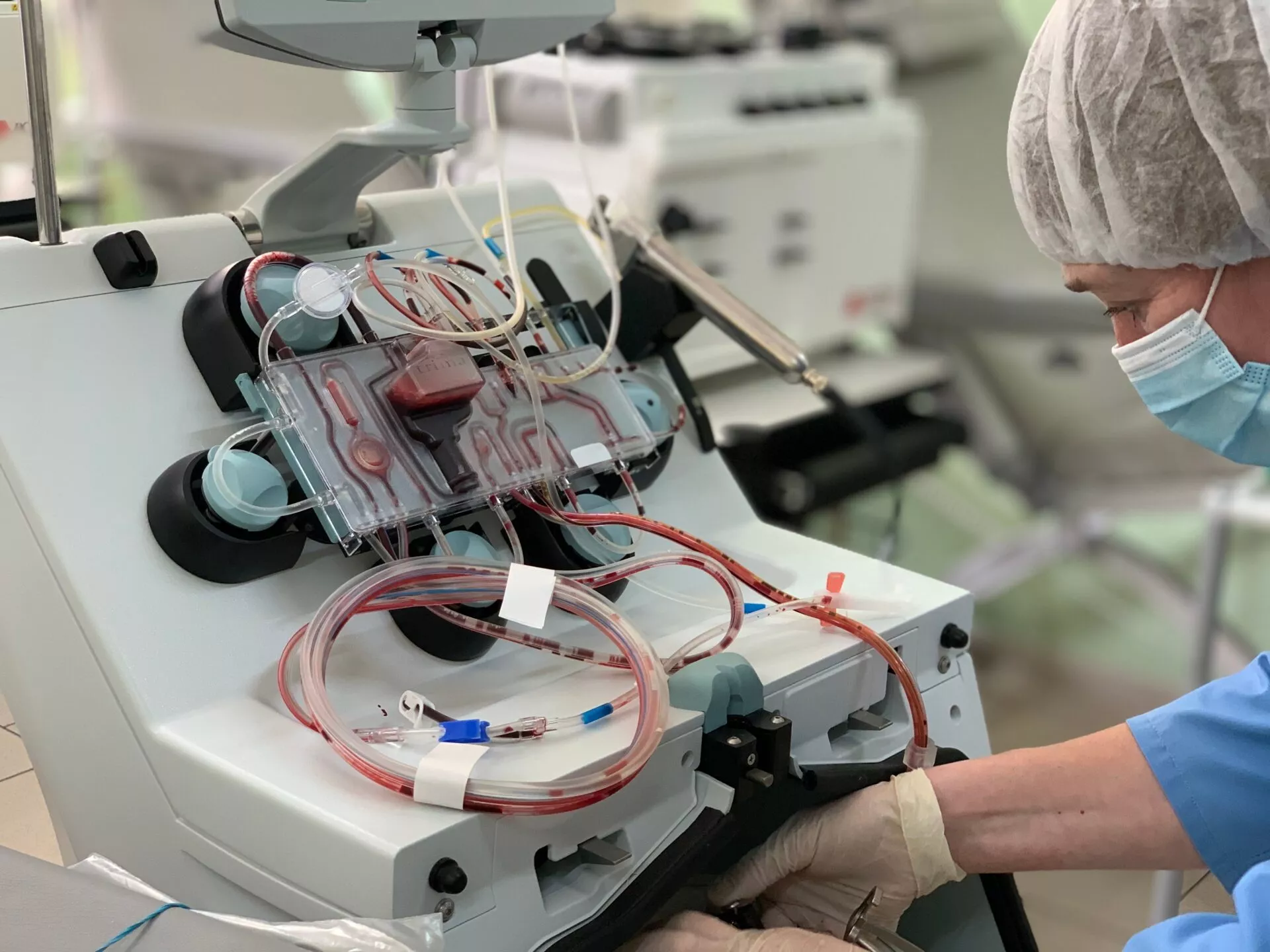
Before continuing, let’s first take a short refresher on how cell and gene therapy treatments work: live cells are collected from a human donor and are transported to a manufacturing site; at the site, they will be modified and refined into a product that can be frozen and shipped to a treatment center; once at the treatment center, the product can be thawed and administered when the patient is ready.
In allogeneic CGT treatments, the starting tissue is collected from a healthy donor. Autologous therapies, on the other hand, require the patient themself to provide the tissue so that it can be processed into a fully personalized treatment. This makes autologous therapies logistically more complex because the patients—who are typically very sick—must travel, first to an apheresis site to have the cells harvested and then again to a treatment center to receive the resulting therapeutic product at some later date.
Coordinating this end-to-end process is complex and is further compounded by the short lifespan of the ex vivo cells (24-48 hours). If the tissue is no longer viable when it arrives at the manufacturing site or if it arrives within the safety window but there isn’t an available manufacturing slot, the cells may need to be abandoned and the entire process repeated.
There are many important players involved in delivering CGT treatments. For the patients, however, their primary (and, in commercialized treatments, usually only) point of contact will be with the clinical staff at the apheresis and treatment sites. What they may not fully appreciate is that, behind the scenes, there are a number of critical stakeholders who make the treatment possible. Below, I outline the two most important:
Therapy Developers
Therapy developers are the visionaries of the CGT world, pushing the frontiers of medical science to develop new treatments. They are the companies who have deeply invested in the CGT research and have literally developed those novel products, taking them from theoretical models, through animal trials, to human clinical trials and, eventually, to market.
Many of the emergent therapy developers are start-ups or smaller companies who simply do not have the expertise or facilities to properly commercialize production and therefore contract CDMOs to handle manufacturing (and sometimes also development). Even larger companies with their own in-house production sites will often bring one or more CDMOs into their manufacturing network. This can be to meet scalability needs, access specialized equipment, manage peaks in production demand, or to increase their geographical reach.
CDMOs
Not only are CDMOs specialized in high-volume manufacturing, but (as mentioned above) they sometimes also engage in developmental work for CGT therapies—hence the ‘D’ in CDMO! Their expertise encompasses a range of tasks, from cultivating specific cell lines to managing the complex biochemical processes required for gene editing.
This makes them ideal partners for therapy developers in search of manufacturing capacity, however, with multiple clients on their roster, CDMOs have to juggle varying (often conflicting) work requirements and schedules. It’s a constant balancing act, with intricate choreography required to meet everyone’s expectations.
Despite their many overlaps in function and responsibility, developers and CDMOs face distinct challenges in the day-to-day operations associated with delivering a CGT therapy to patients.
Therapy developer challenges
- Logistical complexity of slot allocation: effective slot allocation is critical to the success of the entire CGT process. If a patient apheresis slot is delayed, it can have a significant knock-on effect on the availability of manufacturing slots. As such, every stakeholder—developer, clinical staff, patient, and manufacturing sites—must be perfectly synchronized.
- Patient-centricity: while treatment centers have the immediate responsibility for patient care, it’s the developer who holds ultimate accountability. It is thus critical that they ensure the research, production, and clinical timelines are aligned and that the appropriate tools are available to effectively coordinate these moving parts—all while keeping the patient’s well-being at the forefront.
- Effective communication: navigating a multi-disciplinary landscape requires keen coordination skills, especially when the therapy developer, clinical staff, logistics partners, and manufacturing sites must all be on the same page for successful outcomes. This is typically a manual process, organized by a developer representative via email and phone and can involve significant back-and-forth.
- Manufacturing capacity management: for therapy developers with their own production facilities, tracking the availability and allocation of resources can make the difference between a commercially viable process and failure. Effectively implementing the right tools and methodologies for efficient in-house CGT production is a strategic necessity and becomes even more critical when coordinating production across a mixed network of sites.
CDMO challenges
- High-volume production: unlike a therapy developer with its own manufacturing facilities, CDMOs must meet the needs of multiple clients, often with dramatically different requirements, proprietary processes and highly specific equipment needs. This means extensive training and cross-training, with dedicated cleanrooms for specific clients, all requiring highly complex planning.
- Flexibility: in order to retain sufficient capacity and buffer to meet incoming demand, CDMOs may often need to keep entire dedicated labs prepped, empty, and ready for use. Likewise, staff can be on-call and/or required to work long hours to accommodate late-arriving tissue samples or adjust to unexpected changes. Simply managing these resources effectively can be a full time job.
- Tracking and enhancing performance: each CDMO client expects their product to take priority, with manufacturing turnaround times negotiated as part of the contract. With such a variety of products, procedures, methods, and devices being employed at a single site, monitoring progress and taking corrective measures to enhance performance can mean the difference between successful delivery and financial penalties.
Naturally, these challenges are by no means insurmountable. In my next blog post, I’ll outline several ways that Binocs has been designed to address these highly specific issues and why we offer distinct solutions to developers and CDMOs.
Want a sneak preview? Reach out today and ask to demo our solution for optimizing your CGT operations!
 News
 News