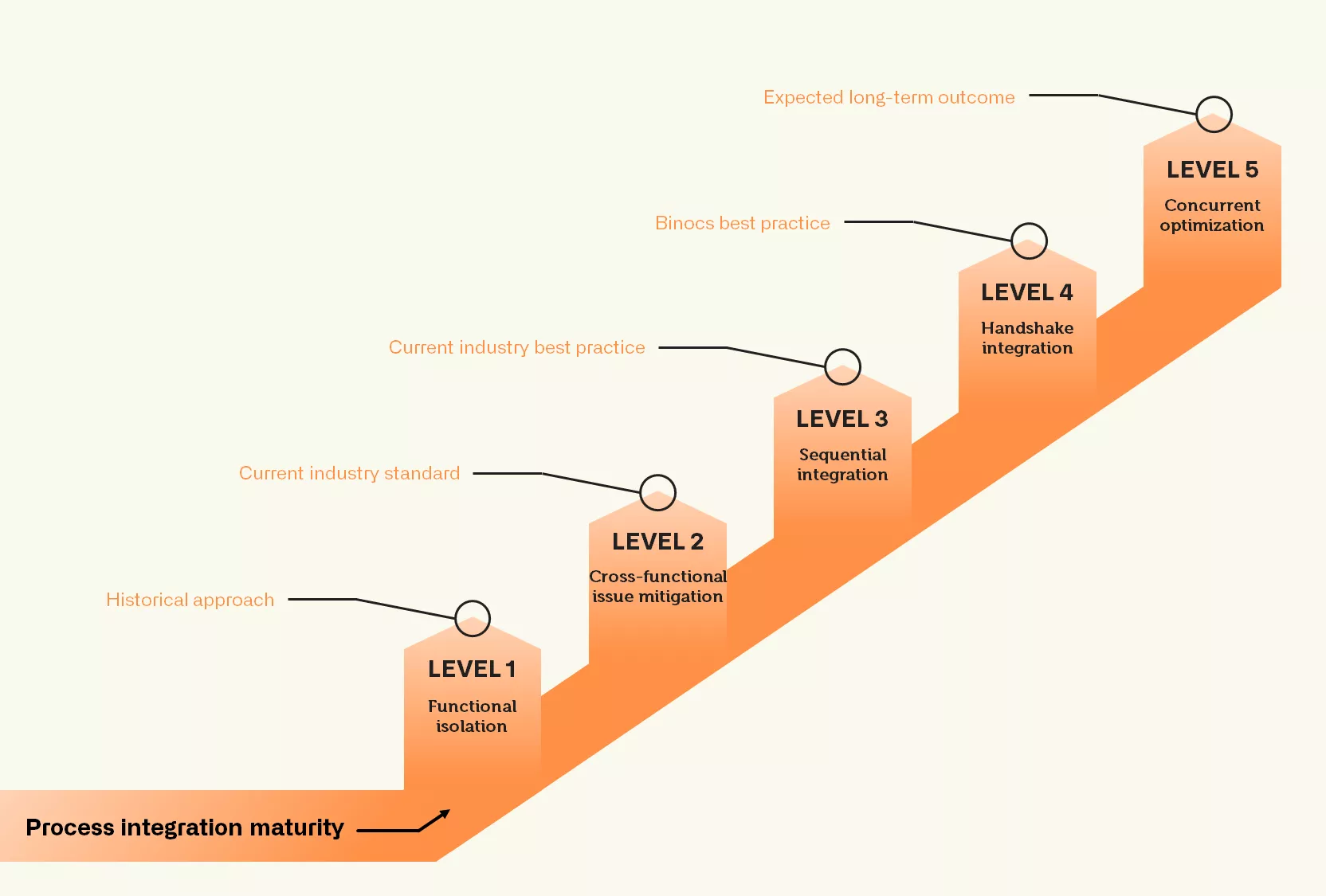
The first level of maturity in process integration represents the status quo for pharma companies until about a decade ago: siloed procedures, specific to narrow requirements, all working in isolation. In the context of planning work, each functional group within the end-to-end product release supply chain operated behind a Chinese wall, each with its separate processes, and with limited (if any) support from dedicated digital tools.
In this model, every planning stakeholder within the product release ecosystem scheduled their operations independently, perhaps with some shared goal-setting but with effectively zero cross-functional alignment on process and no standard practices for mitigating deviations and other delays.
In the last ten years, pharmaceutical companies have progressed towards a more cross-functional approach. This is partially as a result of the increased adoption of digital systems in that same period, with tools such as Excel being used to collect, collate, analyze, and address issues identified via more traditional means (emails, phone calls, and recurring meetings, both within and between departments). This allows response and execution processes to be established to collaboratively tackle challenges that span multiple departments.
For planning and scheduling, this cooperative approach is characterized by S&OP (Sales and operations planning) activities, whereby Management from different functional stakeholders meets to align on strategy, with the goal of overcoming blockers to streamline the production, inventory, sales and financial plans. For a lot of pharma companies, this represents the current industry standard, with only some functions (for instance, Production) using dedicated digital planning tools and often developing end-to-end plans with minimal input from certain key stakeholders.
It is generally recognized that there are distinct advantages to adopting digital solutions that can handle the specialized, repetitive, and computationally complex tasks that are relevant to different departmental responsibilities. In parallel, IT teams endeavor to establish a connected digital ecosystem that can facilitate communication and collaboration between departments and, to some extent, between different solutions.
This is certainly the direction of travel for planning in pharma companies today; for most, it represents the aspirational best practice approach. Indeed, many of our customers subscribe to Binocs as part of a wider digital transformation strategy to implement dedicated systems for planning different functions (e.g. production and QC). Recently, they have also started using digital supply chain twins to derive smart parameters that can further help with process streamlining. Realizing this goal requires significant endorsement from senior leadership but can also generate considerable improvements in service level, utilization and planning outcomes.
At Binocs, we’re already working to deliver the next step—and what we anticipate will become the new industry gold standard for business process integration in end-to-end planning for pharma release. In our vision of handshake integration, we propose a joined-up approach to dynamically coordinate plans across the separate quality control (QC), manufacturing, and supply chain functions, with the goal of achieving a fully optimized goods release processing time (GRPT).
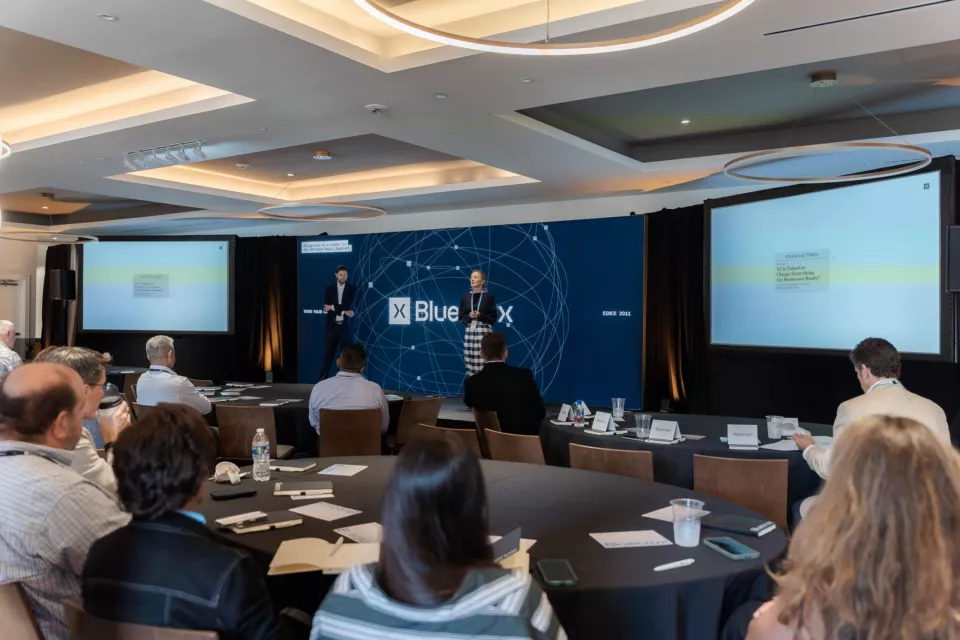
As outlined in our recent webinar and at LogiPharma 2023, Bluecrux is already piloting this approach in collaboration with OMP. By seamlessly integrating their Unison production planning software with Binocs for QC planning and Axon as the digital supply chain twin to generate high quality, differentiated parameters, we have delivered a coordinated rhythm between QC, manufacturing, and the wider supply chain.
While it may still be quite distant, the ultimate endpoint of this journey is for companies to implement a wholly mature and technologically advanced approach to process integration. In a planning context, we expect this to emerge as a fully integrated solution that concurrently optimizes scheduling across QC, manufacturing, Logistics, Plant Maintenance, and beyond.
This comprehensive, end-to-end approach would represent the pinnacle of digital transformation, enabling complete operational optimization, driving efficiency, reducing lead times, and enhancing resource utilization. This long term ambition would also promote real-time decision-making, agility, and responsiveness to market demands.
- Most life science organizations working towards greater cross-functional integration within their product release pipeline are currently at maturity level 2 (interdepartmental conversations with some shared planning but a small amount of digital support limited to only certain teams).
- Those companies that have already implemented Binocs QC scheduling are ahead of the pack, typically representing a level 3 maturity of process integration (dedicated planning tools for different functions but with limited communication between them or end-to-end planning processes).
- This remains the best practice, towards which all companies should be aiming as a minimum.
- More companies are exploring ways to future-proof their production pipeline by integrating Quality Control and Supply Chain planning processes and systems to achieve a reduced GRPT.
Interested to learn how Binocs could integrate with your production planning and supply chain solutions to improve overall service levels? Reach out today for more information!
 News
 News