In this post, we briefly explore an autologous therapy slot allocation case study demonstrating how Binocs has helped a small-scale developer of CGT therapies for chronic kidney diseases to quickly adapt to business needs via a fast and affordable implementation of our innovative technology.
In a rush? Here are the 3 key takeaways
- 👉 Small and medium scale advanced therapy developers don’t always have the resources to manage patient and manufacturing logistics manually when they instead need to focus on technical and scientific priorities
- 👉 Patient and manufacturing slot management for autologous therapies has a lot of moving parts and tight constraints; this makes manual coordination with tools like Excel difficult during early clinical trials and almost impossible when patient numbers ramp-up during pre-commercialization and market roll-out
- 👉 Binocs has purpose-built functionality that connects manufacturing site scheduling and client master data to provide treatment centers with full visibility on slot availability. This allows them to schedule patient apheresis at a time that maximizes the chance of successful treatment
In 2022 we were approached by a small-scale developer of autologous therapies who was struggling to manage the very tight, 24-day end-to-end flow of their treatment cycle. At that time, the company was in Phase II/III of clinical trials and were already treating dozens of patients with chronic kidney diseases at several hospital sites across USA.
With the prospect of full commercialization imminent, they were starting to expand the number of treatment sites and increase capacity in preparation for a ramp-up in treatment. They realized that managing the process manually was no longer feasible and needed to focus their in-house energies on the scientific and medical practicalities of orchestration, rather than the technical aspects of patient/manufacturing logistics.
Did you know that Bluecrux has published an eBook about the CGT industry?
Introducing
Voices from the Advanced Therapies Space: collected discussions and advice from
experts in the CGT industry
A unique deep dive into the challenges of the cell and gene therapy sector, from the perspective of established experts in the field, in their own words
Download your FREE copy today!
As briefly outlined in previous blog posts, delivering autologous treatments is operationally complex, due in part to the nature of the source material. Treatments such as that being developed by our client are individual to the patient and the final product is manufactured from their own cells, which have a very short ex vivo lifespan.
This means that treatment centers must schedule patient apheresis (cell collection) in such a way that the live cells can immediately be shipped and delivered to the manufacturing site within a pre-agreed time slot when there will be the requisite manufacturing capacity.
There are a lot of moving parts to consider when calculating this time slot:
- Patient availability for apheresis: this can vary significantly depending on the exact patient condition
- Sample viability periods: typically 24-48 hours after apheresis but this depends significantly on the sample state
- Sample state: some sample types can be cryopreserved, others must be kept refrigerated (and sometimes both may be required for the same patient)
- Transport times: which depends on distance between the specific treatment center and the manufacturing site
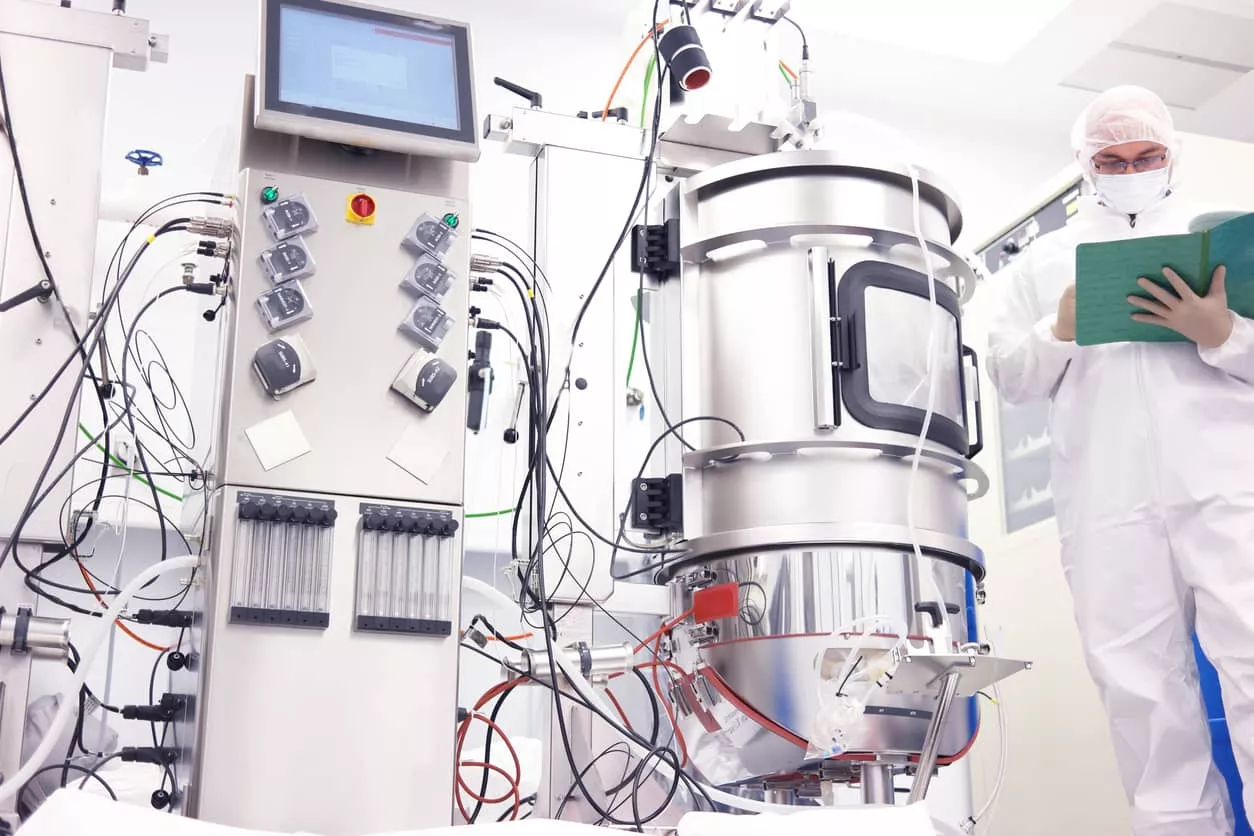
- Manufacturing capacity: manufacturing requires multiple bioreactors and highly-trained personnel, meaning that treatment production cannot be ‘stacked up’
During the first year of pre-commercialization, they successfully managed patient apheresis and manufacturing slots using complex Excel spreadsheets, populated with master data defining the above constraints. However, they quickly identified the hidden costs of using Excel: while the spreadsheet was able to provide some visibility for treatment centers, it certainly wasn’t optimized and that visibility was far from being in real time.
It also required an unsustainable level of manual intervention, with personnel constantly needing to communicate with both treatment and manufacturing sites via phone and email to coordinate activities, often on an hour-to-hour basis.
That’s when they approached Binocs, with the goal of providing their treatment center partners with full visibility on the availability of manufacturing.
By following the principle of “intelligent implementation”, Binocs is able to deliver a lot more than a centralized and digitalized analog of existing processes. Rather than simply replacing their Excel spreadsheet, we deployed Binocs at their manufacturing site to provide comprehensive, AI-empowered scheduling.
This then gave them a complete, end-to-end overview of their production capacity (in terms of the availability and suitability of both personnel and equipment), allowing Binocs to accurately anticipate available manufacturing slots days and weeks in advance.
By combining this information with the above master data, Binocs has successfully provided treatment centers with an easy-to-use slot picking system. Now, health care professionals at a site need simply select a day and time that suits their patient availability from the options provided. In the back-end, Binocs knows how long the specific sample type will take to reach the manufacturing site from that location, only displaying the options that will maximize the likelihood of successful and timely processing.
Those options are continuously updated according to actual availability, providing treatment centers with a single, real time system that manages all requests without the need for manual intervention by the therapy development team.
Now that it has been implemented, the Binocs solution also has immediate potential for scalability:
- As new treatment centers are introduced, they can readily be onboarded with minimal fuss;
- With the expansion of treatment production, new manufacturing sites / CDMOs will be introduced to the Binocs system, meaning both that their scheduling can be leveled-up and their slot availability will immediately be incorporated into the slot picker;
- As the therapy developer continues to roll-out its IT strategy, Binocs can also be integrated with their new COI/COC platforms.
Interested to learn how Binocs could support the scale-up of your advanced therapy by optimizing manufacturing and patient slot management? Why not reach out for a chat!
 News
 News