Daily stand-up meetings: we all know them. It’s where we all get together and discuss the day ahead. In QC labs, however, where capacity scheduling is very challenging, these meetings are critical. Therefore: a couple of quick tips to organize those daily stand-up meetings.
Tip 1: Keep it short & sweet
Keep your daily stand-up meetings short & sweet! Think 5 to 10 minutes daily, depending on the size of the team. This minimizes the time-investment as well as creating a sense of efficiency. To do that:
- Timing: start and end the meeting at the same time, every day. “We don’t start the meeting at 8:50 or 9:10, but at exactly 9:00 in the morning”. That creates a routine and awareness across the team.
- Include everyone: make sure all team members are present. You don’t want to go around after the stand-up to collect additional information from people that were not in the meeting.
- Moderate: make sure there is one person in charge who can moderate the stand-up as efficiently as possible. Most often, it’s recommended that the person who is responsible for the schedule leads the meeting.
- No 1-to-1 discussions during the stand-up! If things need to be discussed in more detail, do that after the stand-up with only the relevant people involved.
Tip 2: Get to the point
As you only have 5 to 10 minutes, you need a system in place to immediately get to the point and address the most important stuff. To do that, organize your meeting around the plan board and make sure the meeting follows a fixed structure. For example:
- Discuss progress made yesterday: to do that as efficiently as possible, ask every analyst to place a color-coded magnet in front of his or her name:
- Green: “Yesterday I was able to execute everything as planned.”
- Yellow: “Yesterday, I didn’t finish everything as planned, but I can manage.”
- Red: “Yesterday, I didn’t finish everything as planned, and some of my tasks will need to be rescheduled.”
- Address the most pressing issues: the person leading the meeting can immediately address the ‘red’ issues: understanding the problem and impact on the planning.
- Formulate an action plan: what needs to be re-scheduled? What can be postponed? What is high and low priority?
- Re-schedule & distribute: after the meeting, the person in charge of the schedule uses this input to re-schedule. Once re-scheduled, distribute the new planning across the team.
Tip 3: track, track, track!
Keep a track-record of the most important information discussed in the stand-up meetings. You can use this information to create KPIs afterward. For example, note down:
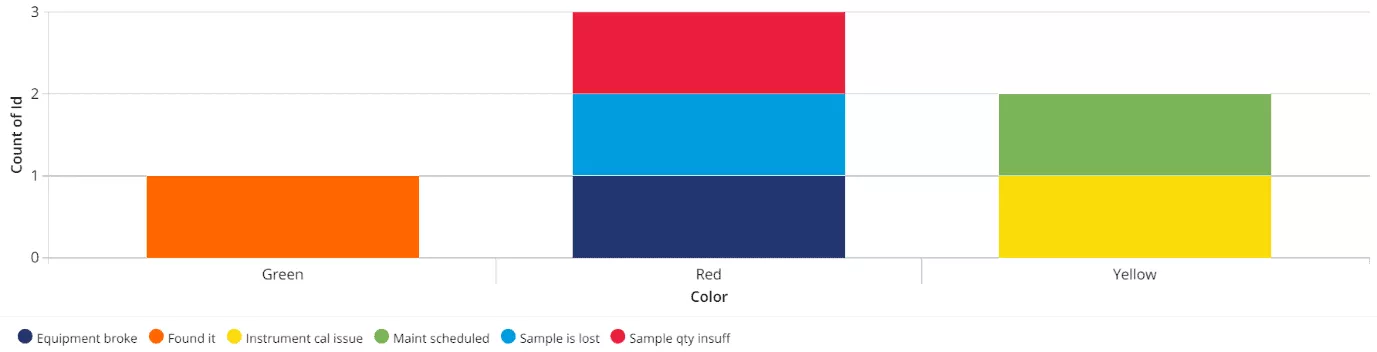
- Count: how many of our lab analysts were in delay? How many of our lab analysts escalated a red or orange issue? It could be that after a while, you notice it’s often the same lab analysts who could not execute the planned activities. That’s valuable input for a 1-to-1 conversation.
- Reasons late: what are the reasons for the delay? Specific equipment that keeps failing? Specific samples that were not yet received? Was contamination holding up progress?
Colored notes
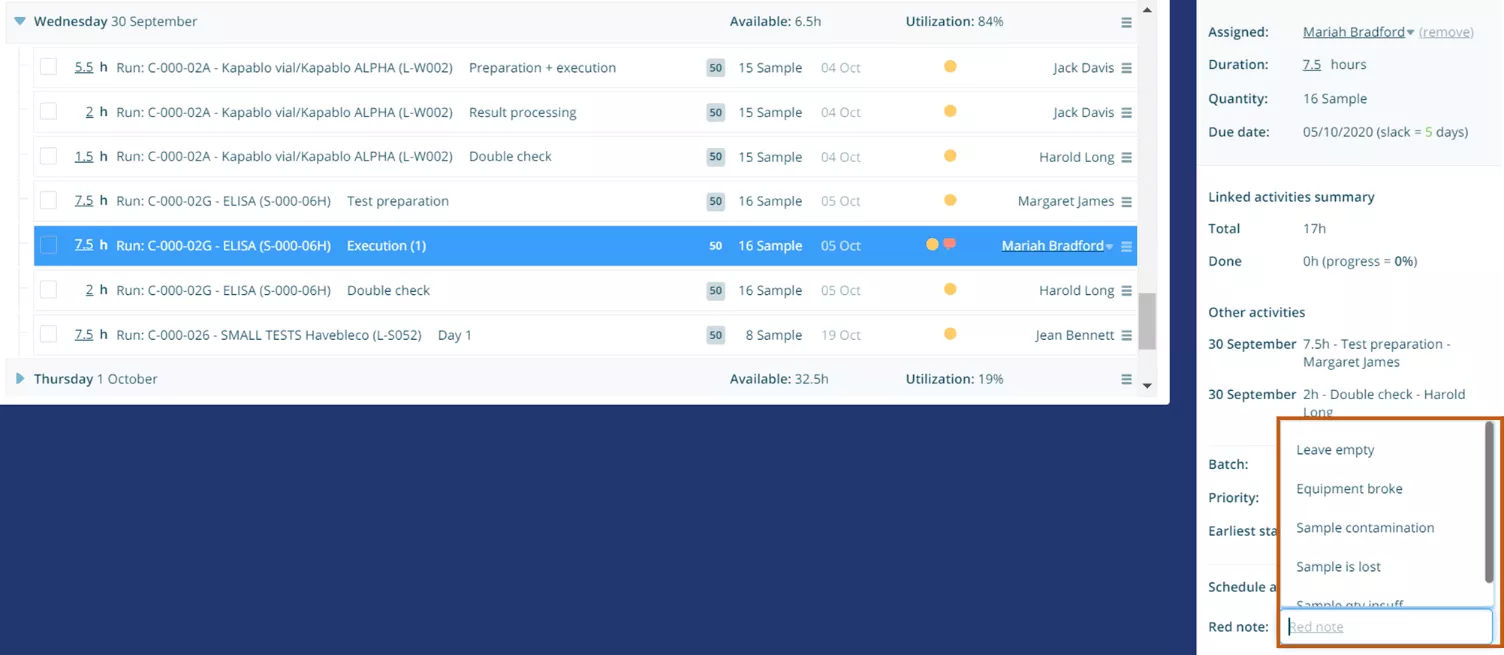
Very similar to adding color-coded magnets on a physical white-board, in Binocs, the lab analyst can add color-coded notes to their scheduled activities. They can then pick from a pre-defined list of late reasons (that you can define yourself): equipment broke? Contamination? Samples missing?
 News
News
 News
News